
Key Takeaways
- Sharks have survived over 400 million years by adapting to their environment, not by being the biggest or the fastest. The same principle applies to businesses.
- The companies that stay ahead aren't the ones with the best product today. They're the ones constantly reading their surroundings and adjusting before they have to.
- Staying competitive is less about predatory instincts and more about knowing your ecosystem better than anyone else in it.
Shark Week returns to the Discovery Channel every summer, drawing millions of viewers who tune in to watch one of nature's most successful predators in action. But beyond the drone footage and dramatic narration, there's a surprisingly practical business lesson playing out on screen.
"Sharks have outlasted dinosaurs, ice ages, and five mass extinction events," said Erin Banta, Co-Founder and CEO of Pepper Home, a company that offers bedroom furniture. "They pulled that off by being adaptable, efficient, and relentlessly tuned into their environment, which are the same qualities that separate companies that thrive from companies that quietly disappear."
Whether you're a founder trying to gain traction or a team lead protecting market share, here's what Shark Week can teach you about staying ahead.
Keep Moving or Fall Behind
Certain species of sharks have to keep swimming to survive. If they stop, water stops flowing over their gills, and they suffocate. It's a brutal biological fact, but it translates directly to business. Companies that coast on past success, milk a single product line, or assume their market position is permanent are already losing ground. Momentum matters more than most leaders realize.
"The moment a company decides it has arrived, the decline has already started," highlighted Alan Feit, President at Feit Electric Company, Inc., a company that specializes in LIFX smart lights. "Comfort is the most dangerous place to operate from."
Audit your business for signs of stagnation. Are you still running the same playbook from three years ago? Has your team stopped experimenting? If nothing has changed in your approach recently, that silence should be loud.
Adapt to the Water You're In
Sharks live in every ocean on Earth, including tropical reefs, arctic waters, deep-sea trenches, and shallow coastlines. They got there by evolving to meet the conditions in front of them. Businesses that insist on operating the same way, regardless of market shifts, economic changes, or consumer behavior, are choosing to swim against the current.
"Instead of being really good at doing some particular thing, companies must be really good at learning how to do new things," said Martin Reeves, former chairman of the BCG Henderson Institute. "Those that thrive are quick to read and act on signals of change."
Pay attention to what's changing in your industry before it becomes obvious. Talk to your customers regularly. Watch what your competitors are testing. The companies that adapt early rarely find themselves scrambling later.
Test the Bite Before You Commit
Sharks do something called an investigatory bite. Before fully committing to prey, they take a small, exploratory bite to figure out what they're dealing with. If it's worth pursuing, they go all in. If not, they move on without wasting energy. The same approach works in business. Too many companies pour massive budgets into untested ideas, launch products without a pilot, or expand into new markets with nothing but a gut feeling and a slide deck.
"The smartest companies we've worked with rarely bet big without testing small first," pointed out Andy Khubani, CEO of Copper Fit, a company that offers compression gloves. "Running a pilot costs a fraction of what a failed launch does, and it gives you real data instead of guesses."
Before committing major resources to a new initiative, test it on a smaller scale. Run an A/B test on the messaging. Soft launch in one market before rolling out nationally. Let a handful of customers try the new feature before rebuilding the whole product around it. Small, low-risk experiments give you the information you need to make high-confidence decisions.
Sharpen Your Senses
Sharks can detect a single drop of blood from a quarter mile away. They sense electrical impulses from other animals through specialized organs in their snouts. Their survival depends on reading signals that other creatures miss entirely. In business, the equivalent is data, customer feedback, market trends, and competitive intelligence. The companies that spot shifting patterns before everyone else are the ones that move first.
"The ability to embrace change and take advantage of it will determine the winners and losers of the 21st century," said René Rohrbeck, head of the Center for Net Positive Business at the EDHEC Business School.
Build systems that surface signals early. Set up Google Alerts for your industry. Review customer complaints monthly for patterns. Track what's trending in adjacent markets. You don't need to predict the future. You just need to notice changes before they become crises.
Don't Waste Energy on the Wrong Prey
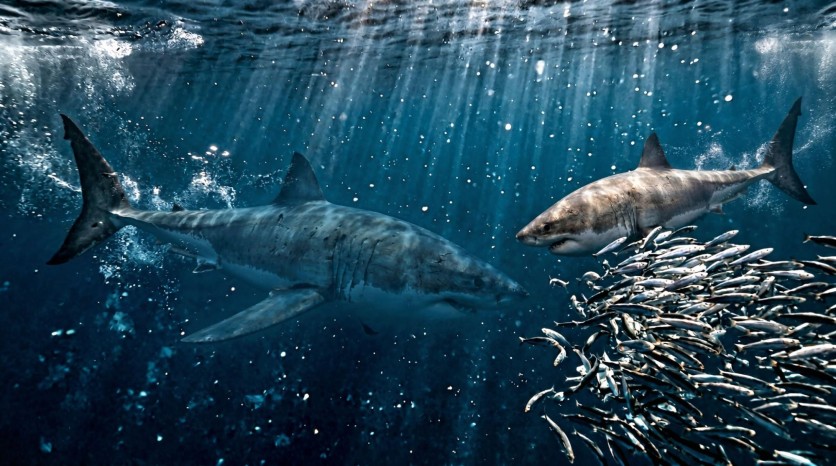
Sharks are efficient hunters. They don't chase everything that moves. They conserve energy and strike when the opportunity is right. Too many businesses exhaust themselves chasing every trend, every market, every shiny new strategy that comes along. That scattered approach burns cash, tires teams, and produces mediocre results across the board.
Get clear on what your business does best and where your highest-value customers are. Say no to opportunities that pull you off course. Focus means being intentional about where you invest your time, money, and attention.
Sharks Can't Swim Backward
Sharks are physically incapable of swimming in reverse. Their pectoral fins can't curve upward the way most fish fins can, so backward movement simply doesn't happen. They can only go forward. There's something useful in that. Businesses burn enormous amounts of time and energy rehashing old decisions, mourning failed products, or trying to recreate strategies that worked in a completely different market. That backward pull keeps teams stuck and slows everything down.
"Revisiting a decision you've already made is one of the most expensive habits a company can have," said Terry Davison, CEO of Juvonno, a company that offers clinic management software. "Learn from it, adjust, and keep moving. Going backward has never put anyone ahead."
When something doesn't work, extract the lesson and move on. Stop convening meetings to relitigate choices that were made months ago. Give your team permission to let go of what didn't pan out and redirect that energy toward what's next. Forward is the only direction that produces results.
Travel with the Right School
Not all sharks are solitary. Many species travel in groups, hunt cooperatively, and benefit from the protection and intelligence that comes with numbers. In business, who you surround yourself with matters. Strategic partnerships, advisory boards, mentors, and industry networks can give you access to insights, resources, and opportunities that you'd never find alone.
"The businesses that grow fastest are usually the ones with the strongest relationships in their industry," explained Sanford Mann, CEO of American Hartford Gold, a company that specializes in gold IRA investments. "A strong network gives you visibility into insights you'd never learn from the inside."
Be intentional about the people and companies you associate with. Join industry groups. Attend conferences that put you in the room with people who are ahead of you. Build relationships before you need them. The right partnership at the right time can change your trajectory overnight.
Protect Your Ecosystem
Sharks play a critical role in maintaining the health of ocean ecosystems. They regulate populations of other species, prevent overgrazing of vital habitats, and keep the food chain in balance. When shark populations decline, entire ecosystems suffer. The same principle applies to business. Companies that extract value from their industries without giving anything back eventually weaken the very system they depend on.
"Building an industry up will always be smarter than trying to dominate it," pointed out Titania Jordan, CMO of Bark Technologies, a company that provides a safe phone for kids called the Bark Phone. "The healthiest companies invest in the ecosystems that support them, whether that's their supply chain, their community, or their workforce."
Invest in your industry. Mentor smaller companies. Support fair practices in your supply chain. Treat your employees and vendors like partners. A thriving ecosystem produces better opportunities for everyone in it, including you.
Don't Wait for a Crisis to Evolve
Sharks didn't wait for the asteroid to evolve. They were already adapted to survive in a range of conditions long before mass extinction events hit. Businesses that wait until revenue drops or a competitor launches something disruptive to start innovating are already behind. The best time to evolve is when things are going well, and you still have room to experiment.
"Companies that innovate from a position of strength have more options and more runway than the ones scrambling to catch up," said Justin Soleimani, Co-Founder of Tumble, a company that specializes in washable rugs. "Making evolution a regular practice takes the panic out of it."
Schedule regular strategy reviews, even when business is good. Dedicate a percentage of revenue to R&D or experimentation. Encourage your team to bring ideas forward without waiting for permission. The companies that evolve continuously are the ones that rarely face existential crises.
Sharks Have Thick Skin
A shark's body is covered in tiny tooth-like scales that protect it from injuries and reduce drag, so it can move faster through water. The rougher the environment, the more that built-in armor matters. Businesses deal with their own version of rough waters every day, from bad reviews to competitor trash talk, social media pile-ons, and unsolicited hot takes. The noise is constant, and companies that react to every comment, critique, and viral tweet end up spending more time defending themselves than actually building.
"There's a difference between feedback that makes you better and noise that slows you down," highlighted Emily Greenfield, Director of Ecommerce at Mac Duggal, a company that offers formal wedding guest dresses. "The best companies know which one they're hearing and respond accordingly."
Not every piece of criticism deserves a response. Learn to separate constructive feedback from performative outrage. Pay close attention to what your customers are telling you directly. Scroll past the rest. Thick skin means protecting your energy, so you can stay focused on the work that actually moves your business forward.
Survival Belongs to the Adaptable
Shark Week is entertainment, but the biology behind it is a masterclass in long-term survival. Sharks didn't outlast five mass extinctions by having the sharpest teeth. They made it because they kept adjusting, kept reading the water, and never assumed that what worked last season would carry them through the next one.
"The companies that are still here in 10 years won't be the ones that had the best quarter this year," said Jennifer Sprague, CMO of Hammitt, a company known for its shoulder bag collection. "They'll be the ones who treated every quarter like a reason to get better."
Shark Week runs for seven days. But the habits that keep your business competitive don't have a season. Stay alert, stay flexible, and keep swimming.
ⓒ 2026 TECHTIMES.com All rights reserved. Do not reproduce without permission.


